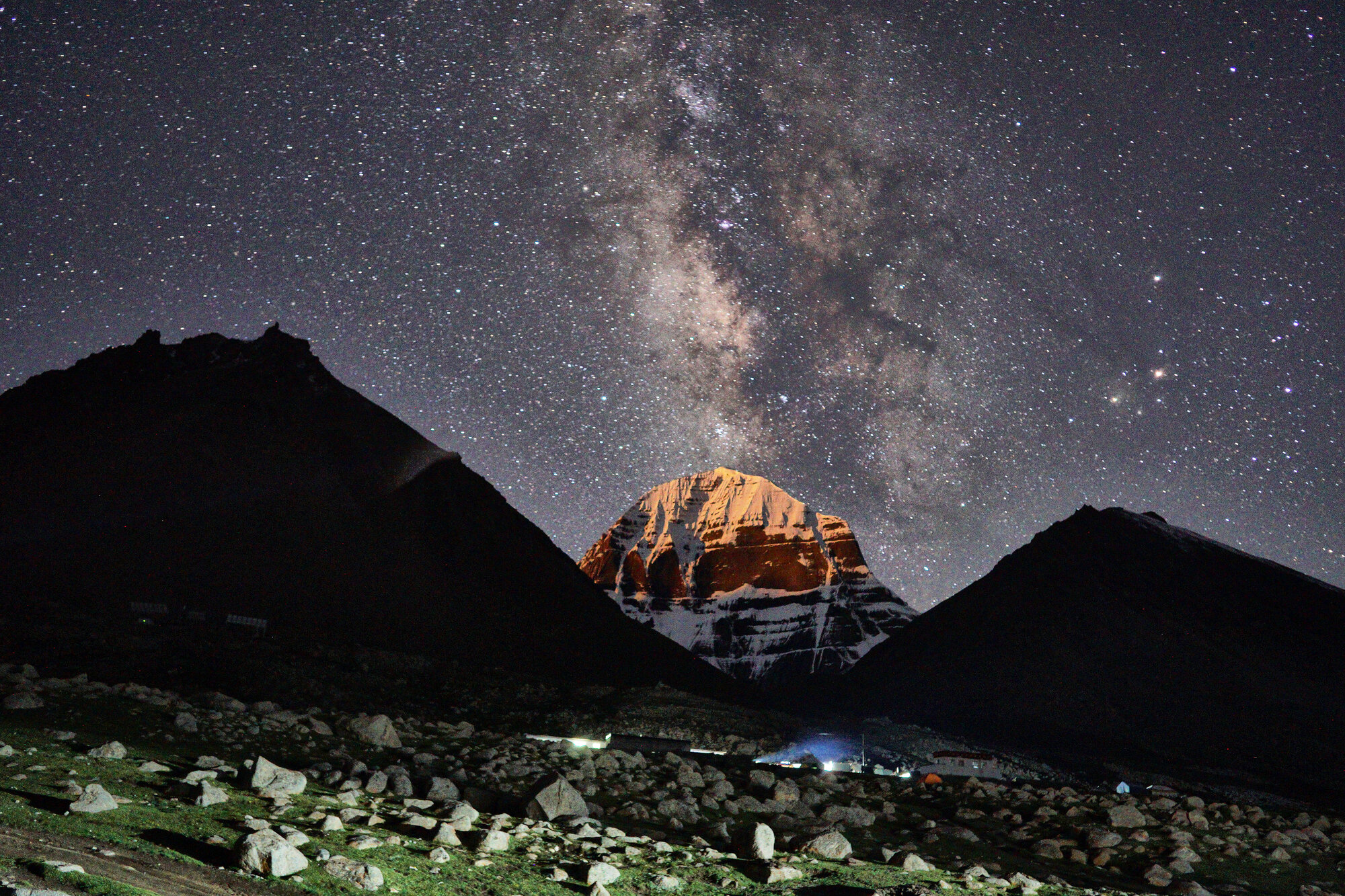
However you get to Darchen — via Nepal, via Lipulekh, via Sikkim, or independently through Tibet — the parikrama itself is largely the same experience. This is what to expect once you're there.
Lake Manasarovar
The lake parikrama is done by bus, covering roughly 88 km around Lake Manasarovar (Mapam Yumco in Tibetan, Bagaxiang in Chinese), with stops for the holy dip and pooja. The full circuit, including the dip, takes about 3 hours. The water is cold, but the shock passes after the first dip — the traditional practice is three dips. Guides typically advise not staying wet for more than a few minutes given the altitude and cold. The lake is shallow near the shore (knee-deep for a long distance) but reaches 81 metres at its deepest point, covering 412 sq km in total. Many pilgrims collect a few pebbles as memorabilia.
From the lake, it's about 53 km (roughly an hour by bus) to Darchen, the staging town for the Kailash parikrama. Darchen has a small market for any last essentials, and this is your last stop with reliable hot water and a real bed before the parikrama starts.
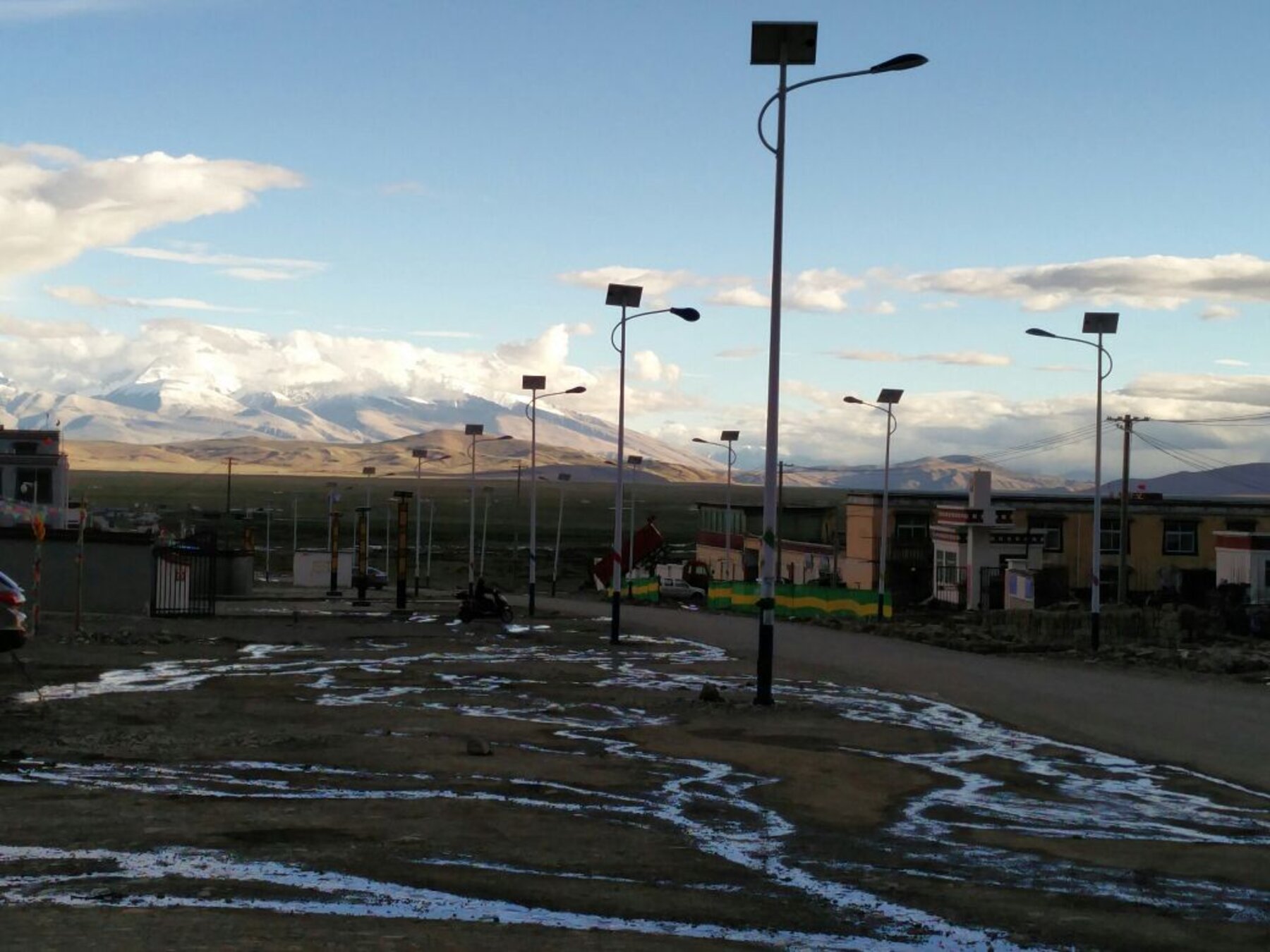
The Kailash Parikrama — Three Days
The circumambulation of Mount Kailash is typically done over three days, starting and ending at Darchen.
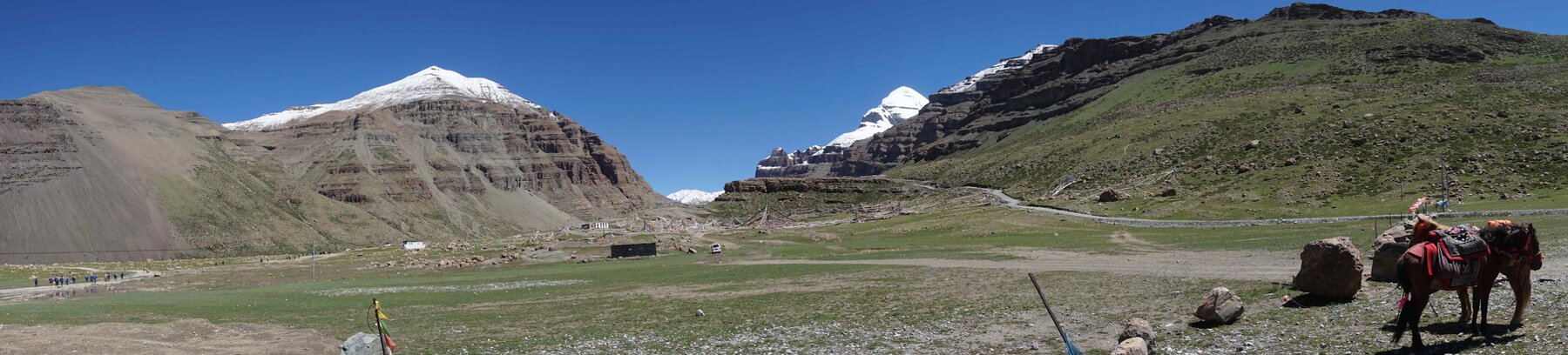
Day 1: Yamadwar to Diraphuk (~15 km)
A short drive from Darchen takes you to Yamadwar, where the parikrama formally begins. This is also where porters and ponies are allotted (see the Training & Preparation page for how that works) — there's no option to arrange this later on the route. The walk to Diraphuk takes 4–5 hours with continuous views of Kailash's north face. Accommodation at Diraphuk is basic (shared rooms, several people to a room) but the sight of Kailash at night, under a clear sky, is one people describe as worth the entire trip.
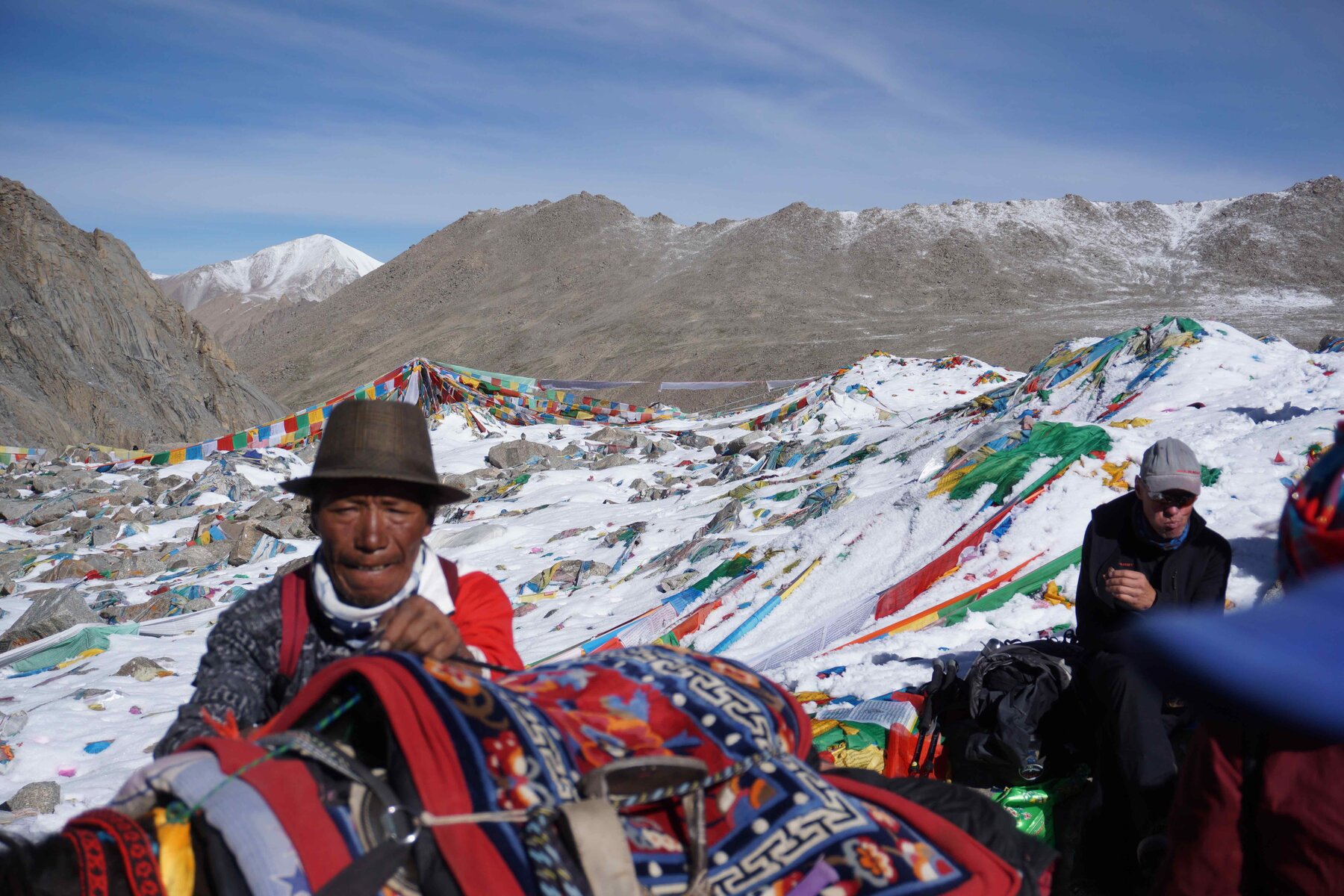
Day 2: Diraphuk to Zutulphuk via Dolma La (~20+ km)
The hardest day. A steep climb to Dolma La pass at 5,800 m, followed by a steep descent where ponies generally can't be used — expect to walk this stretch regardless of whether you've hired a pony for the rest of the route. Weather at the pass is unpredictable and cold; snow underfoot is common even outside winter. Past the descent there's a small shack serving tea and noodles. Accommodation at Zutulphuk is more basic still — expect a shed-like hotel and pit toilets.
Day 3: Zutulphuk to the road head (~3 hours)
A short final walk back to where transport picks you up for the return to Darchen. From here the route back depends on which way you came in.
A note on completing the physical route
Not everyone completes the full walking parikrama, and that's a known, accepted outcome — the Dolma La crossing on day 2 is genuinely difficult at altitude, and some pilgrims turn back from Diraphuk to wait at Darchen while the rest of their group finishes. A common alternative offered by guides: doing three circuits at Yamadwar itself is considered spiritually equivalent to the full three-day parikrama.